ACTimes

Volume 41, Number 2

Spring Issue

President’s Message—Spring 2022


Welcome to spring. The year continues to move quickly, and I hope that all members and their families are healthy and doing well.

The winter of 2022 has been very active for ACT, with each committee and working group having met and jumped headlong into our 2022 activities. You will see the results of these activities in the program for the 43rd Annual Meeting at the Gaylord Rockies in Denver, Colorado (November 13–16, 2022); the nominations for ACT Council, officers, and committees for 2022–2023; our activities supporting diversity, equity, and inclusion (DEI); outreach activities to other societies worldwide; and early career professional activities—not to mention the educational courses, eLearning, webinars, and podcasts rolling out in 2022. 

2022 is the third year of our current three-year Strategic Plan. In April, Council will meet to develop our priorities for the year as well as begin discussions about the new Strategic Plan that we'll develop in 2023 for the next three years. We will again focus on what our members have continued to ask for, including delivering excellent scientific education, advancing professional development for all, and increasing the College’s impact in the field of toxicology. We will be considering the next steps in DEI to ensure that the recommendations of our DEI working group and independent DEI consulting group are incorporated in all that we do and provide to our members. Our other working group on Leadership Development has made initial recommendations, and we will be incorporating their recommendations into our planning. We want to continue to engage our membership and allow those who want to contribute to our activities and those who want to expand their education and capabilities in toxicology to have a place in our future plans. We look forward to communicating our strategic priorities for 2022 later this year.

The Program and Education Committees proposed, and Council approved, an excellent selection of 18 Scientific Sessions, including Hot Topics, and seven Continuing Education courses for our 43nd Annual Meeting at the Gaylord Rockies (November 13–16, 2022). Registration for the meeting is now open, and the most up-to-date details can be found on the ACT Annual Meeting website. We look forward to meeting our vaccinated members in person in November and networking with our fellow toxicologists.

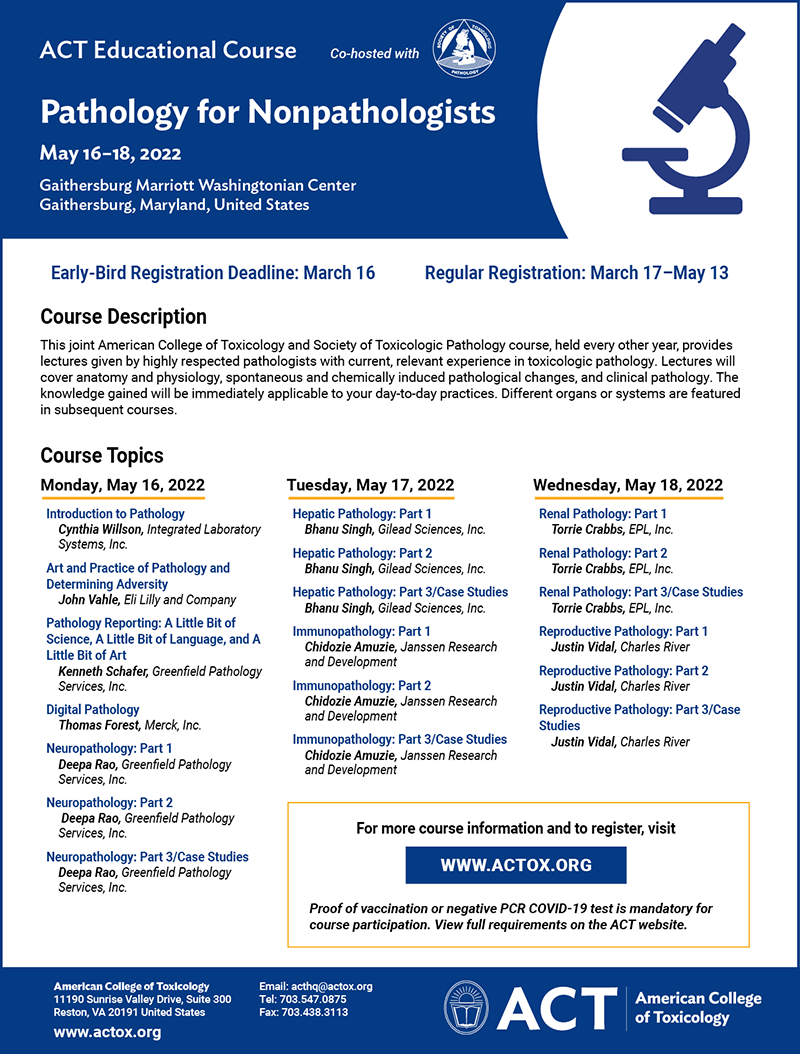
The Education Committee has developed numerous additional offerings via various platforms throughout 2022. With many of our members’ employers still restricting travel, several of our courses in 2022 will be virtual, with live Q&A sessions. These courses include the ACT Toxicology for Pharmaceutical and Regulatory Scientists (Q&A: March 7 to 11, 2022) and Practical Application of Toxicology in Drug Development, co-hosted with the British Society of Toxicology, (Q&A: September 2022). The Advanced Comprehensive Toxicology (August) course, as well as the Pathology for NonPathologists course (May 16 to 18, 2022), co-hosted with the Society of Toxicologic Pathology, are still scheduled for in-person courses in Gaithersburg, Maryland. In addition, toxicology-related webinars and podcasts (ToxChats) and a variety of ACT eLearning seminars available throughout the year.

The Awards Committee has been actively soliciting and reviewing nominations to identify 2022 awardees with a deadline of March 31. This deadline occurs annually, after the nomination system opens each November, and should be added to your calendar.

The ACT Endowment continues to grow from its initial goal of $1,000,000! THANK YOU to those who contributed to this important commitment to our future. ACT will draw from the gains on that principal to assist in funding student travel and fellowship awards in 2022 as it first did in 2021. Thank you in advance for your contributions in 2022. All donations are appreciated and support our future.

We hope that you will see that ACT continues to provide each of our members value for their membership. I wish you continued good health and encourage you to stay engaged with ACT in the manner that suits you best.

Alan Hoberman, PhD, 2021–2022 ACT President

It Takes a Village to Make ACT Successful


What is DEI (diversity, equity, and inclusion)? There may be various acronyms across many industries (D & I, DEI, etc.), but they are all focused on the same goal: to better the work/society environment through diversity, equity, and inclusion.

In reference to DEI at ACT, the current DEI statement reads: The American College of Toxicology welcomes and supports aspiring and established toxicology professionals. ACT is committed to diversity, equity, and inclusion within our organization to promote strong connections among our members, which in turn fosters scientific and professional development within our community. Our culture is one that empowers individuals to actively engage, collaborate, and exchange ideas, and embraces diversity in expression, perspective, and experience.

Why do we need DEI at ACT?

Several business cases for DEI noted that a diverse workforce in an inclusive environment will improve individual and organizational performance; result in better value to customers, clients, and other stakeholders; and make the organization stronger. Although most of the data on DEI are for the workforce, many of the metrics can be applied to professional societies, such as ACT. For example, many job seekers (39% in one survey) would turn down a job opportunity due to lack of perceived diversity and inclusion. The report also discusses that younger employees were more likely to raise the need for inclusion at work than older employees. Furthermore, McKinsey’s research showed that employees that feel higher inclusion were 90% more likely to go out of their way to help a colleague and 45% more likely to stay at an organization. These data suggest a tremendous value for embracing DEI within ACT.

What is being done at ACT?

ACT Council recognized that DEI is important for the future of ACT and added DEI goals into the current Strategic Plan. The first effort by ACT Council to implement the Strategic Plan goals was the formation of the DEI Working Group (WG) in the fall of 2020. Over the past year, the DEI WG diligently established a framework for DEI needs/goals at ACT and presented findings to the Executive Council. One key effort included an assessment of the current thinking of DEI within the College by an independent DEI firm that set a baseline for DEI efforts. As an ACT member, you may have been part of a focus group or taken the DEI Survey in the summer of 2021. If so, we thank you for your efforts and time to make ACT stronger for the future.

In the coming months, ACT Council will evaluate the findings of the DEI consultant—which incorporated the survey, focus group findings, and key stakeholder interviews—and review ways to address recommendations from the DEI working group for DEI in the College. Many of the recommendations and efforts will need member assistance to implement. Please stay tuned for more updates on DEI as we advance the College and strengthen it for the next generation. 

For more information on DEI at ACT, please see the website: https://www.actox.org/about/dei.asp

Peyton Myers, PhD, DABT, ACT Councilor

“Magic Mushrooms” Produce Robust Long-Term Antidepressant Effects


Research into the use of psychedelics such as psilocybin, a hallucinogenic compound found in over 150 species of mushrooms, as a treatment option for mental health disorders and addiction has gained momentum over the past two decades. 

Researchers at Johns Hopkins University School of Medicine recently conducted a long-term follow-up study in 24 participants with major depressive disorder to determine the safety and efficacy of psilocybin administration in combination with psychotherapy. Participants were randomized to either an immediate treatment group, where they entered the intervention stage immediately following screening, or a delayed treatment group, where participants entered the intervention stage eight weeks after screening. In the intervention stage, participants were administered two doses of psilocybin two weeks apart in combination with psychotherapy and followed for 12 months post–second dose of psilocybin.

Throughout the follow-up period, significant decreases in the GRID-Hamilton Depression Rating Scale, the tool used to assess depression severity, were noted. At 12 months post–second dose of psilocybin, the treatment response rate was 75% and the remission rate was 58%. In addition, there were no psilocybin-related serious adverse events noted during the study.

Results from this study add to the growing body of evidence that suggest that psychedelics can be a safe and effective treatment option for a variety of mental health disorders.

Read more about this study in the Journal of Psychopharmacology.

Kristina DeSmet, PhD, DABT, ACT Councilor

Dr. Robert Califf Will Once Again Head the Food and Drug Administration


Dr. Robert Califf is a renowned clinical trialist and founding director of the Duke Clinical Research Institute and previously served as the FDA commissioner under the Obama administration from February 2016 to January 2017. Since leaving FDA in 2017, Califf has served as a senior adviser to Alphabet’s life sciences arm, Verily, and has continued teaching, research, and clinical duties at Duke University School of Medicine. In earning the nomination, Califf had to withstand criticism from both sides of the aisle related to his close ties with industry and his record on opioids, as well as the agency’s actions related to the abortion drug mifepristone during his last stint as commissioner.

For his second stint at FDA, Robert Califf looks to prioritize combatting misinformation about science. In a memo to FDA staff, Califf emphasized a need to develop and communicate a proactive strategy to help the public get the accurate, science-based information they need to use medical products and foods to maintain and improve their health. Additionally, Califf noted how misinformation and disinformation undercut the critical role of FDA and that a purely reactive mode is not appropriate in the era of social media. Another principal focus for the new commissioner is the FDA response to the ongoing pandemic for which the agency will continue to develop additional responses, building on what we have learned both in terms of responding to and preparing for public health emergencies and in developing solutions to many other public health challenges. Califf also laid forth plans to develop prevention strategies for tobacco use, including strategies for e-cigarettes given that nearly 500,000 Americans this year and countless people will suffer strokes, health attacks, renal and heart failure, amputations, and cancer.

Erik Pacyniak, PhD, DABT, Newsletter Subcommittee Member

New Treatment for Adults with Rare Type of Anemia and COVID Updates


An exciting new treatment for adults with a rare type of anemia has recently been approved by the FDA. The recently approved Enjaymo (sutimlimab-jome) infusion decreases the need for red blood cell transfusion due to hemolysis (red blood cell destruction) in adults with cold agglutinin disease (CAD). CAD is an autoimmune disorder that is characterized by red blood cell destruction and leads to anemia and cold-induced circulatory symptoms, such as pain and discoloration of fingers or toes. This application received orphan drug designation, breakthrough therapy designation, and priority review.

In the fight against COVID-19, a fifth vaccine has been authorized by the UK authorities (MHRA) and EU authorities (EMA). Nuvaxovid (Novavax COVID-19) met the required safety, quality, and effectiveness standards and is distinct from other COVID-19 vaccines currently in use as it uses recombinant protein–based technology, which has been used for many years in the development of vaccines to prevent other illnesses (for example, Hepatitis B). The approval authorizes the use of this vaccine in people aged 18 and over for a first and second dose.

In addition to the US FDA (see Winter 2022 Newsletter), the UK and EU conditionally approved in late 2021 Paxlovid from Pfizer. This new combination treatment is for people with mild to moderate COVID-19 who are at high risk of developing severe disease. Paxlovid is an antiviral medicine that combines oral tablets of nirmatrelvir, formerly PF-07321332, and ritonavir and that works by inhibiting a protease required for virus replication. This prevents it from multiplying, keeping virus levels low, and helping the body to overcome the viral infection. Ritonavir slows the breakdown of nirmatrelvir in the body, thereby increasing its effectiveness. Nirmatrelvir is a new antiviral, meaning that it has not been approved for use before. However, ritonavir has been used alongside some HIV medicines for many years to “boost” their activity. This treatment has been authorized for use in people aged 18 and above who have mild to moderate COVID-19 infection and do not require supplemental oxygen and who are at increased risk of the disease becoming severe.

Amritpal Singh Chohan, Newsletter Subcommittee Member

Registration Open: ACT 43rd Annual Meeting


ACT AM banner

Registration for the ACT 43rd Annual Meeting is open! Join us November 13–16, 2022, at the Gaylord Rockies, located outside Denver Colorado.

The 43rd Annual Meeting will include a wide-ranging scientific program and educational courses with distinguished plenary speakers, the popular poster viewing session, an awards ceremony, and several professional networking events.

The ACT Expo Live! and the ACT Annual Meeting Support program provides companies with a unique environment—toxicologists, industry consultants, and other professionals in one location with networking and marketing opportunities at every turn. We invite your company to join us as an exhibitor or supporter so that you can make professional connections and gain valuable exposure at the Annual Meeting.

Register Today!

Early-bird registration pricing ends September 19, 2022.

Visit the ACT 43rd Annual Meeting website to find more details about the 2022 event.

We look forward to seeing you in Denver, Colorado!

ACT Expo Live! 2022


The Rocky Mountains provide a spectacular backdrop for the 43rd Annual Meeting, and ACT Expo Live! 2022—the exhibition during the ACT Annual Meeting—provides exhibitors with a unique environment that cannot be found elsewhere. With more than 1,000 toxicologists, research scientists, industry consultants, and other professionals in one hotel, and networking and marketing opportunities at every turn, this is one event you don’t want to miss!

The Annual Meeting will take place at the Gaylord Rockies Hotel, November 13–16, 2022. ACT Expo Live! is the place for attendees to find out about products and services that are relevant to toxicologists. In addition to the scientific posters in the hall, there are coffee breaks, an evening social, a breakfast reception, and other special events that allow meeting attendees to have plenty of opportunities to visit the exhibition to discuss their needs and find solutions from trusted industry suppliers. The size of the meeting is especially conducive to intimate and relaxed interactions between meeting participants and exhibitors and the perfect opportunity for making valuable B2B connections with other exhibiting companies.

For more information on how you can take advantage of this terrific marketing and networking opportunity, email Liz Kasabian or call 703.547.0875 ext.1437.

Abstract Submission System Now Open for the ACT 43rd Annual Meeting


The 2022 ACT Abstract Submission System is now open! All abstracts must be submitted online using the online submission system prior to the deadline of June 1, 2022 (11:59 pm, Eastern Time).

First-time users will be required to create an account. Once an account confirmation email is received, log into the system and follow the poster guidelines and on-screen prompts to complete your abstract submission. You will receive an email confirmation when you have successfully submitted your abstract. Users may re-enter the system until the deadline to make updates to the abstract or contact information. Abstract acceptance notifications will be sent to the submitting author via email during the week of July 18, 2022. All accepted poster presenters are required to register for the Annual Meeting by August 1, 2022.

ACT will host a Poster Session at the Annual Meeting, Monday, November 14, from 5:00 pm–6:30 pm. Your poster must be printed and displayed in the Exhibit Hall during the Annual Meeting. Attendance at the Poster Session on November 14 is required. There will be an additional option for you to provide a digital version of your poster in an online ePoster gallery. Uploading your poster is strongly recommended to extend the reach of your scientific findings. In-person meeting attendance and presentation at the Poster Session is still required. More details on ePosters will be provided in September.

Previously published abstracts, virtually or otherwise, or those for which the author has not displayed their poster in the Exhibit Hall for the Poster Session, will not be published in International Journal of Toxicology, the official journal of ACT.

Poster topics of interest include:

  • General Toxicology
  • Regulatory Toxicology
  • Safety Evaluation—Nonpharmaceuticals
  • Toxicology Methods
  • Safety Evaluation—Pharmaceuticals

The abstract submission deadline is Wednesday, June 1, 2022 at 11:59 pm, Eastern Time.

Submit an Abstract Today!

We look forward to seeing you November 13–16, 2022 at the Gaylord Rockies in Denver, Colorado!

Corporate Support Opportunities for the 43rd Annual Meeting


The ACT Annual Meeting offers a unique, intimate environment unlike any other in the toxicology community. Because of the top-notch scientific programming and well-known, expert speakers who present the latest science, this meeting has earned a reputation among toxicologists worldwide for being the “must attend” event of the year. The size of the meeting is particularly well suited for in-depth peer-to-peer networking, as well as making B2B connections. Annual Meeting supporters are recognized for their good citizen role in enabling the success of the educational goals of ACT and receive considerable recognition for their generosity via the Annual Meeting Program, the ACT Newsletter, the ACT website, and more! Download the Annual Meeting Supporter Form for complete details, and contact Liz Kasabian with any questions at 703.547.0875 ext.1437. 

2022 Supporter Levels and Benefits

PLATINUM  $10,000+

  • One complimentary meeting registration
  • Hyperlinked logo on meeting website
  • Full-page ad and logo recognition in Attendee List
  • Banner ad in Event App
  • Hyperlinked logo in scrolling website banner
  • Logo recognition in select meeting email messages
  • On-screen logo recognition in session rooms
  • Opportunity to host a Talking Tox Program (limited availability)
  • Logo recognition in Program
  • Email message sent on your behalf to attendees
  • Reserved table at the Awards Ceremony
  • Opportunity to reserve meeting space (limited availability)
  • Logo recognition on special event signage
  • Recognition with company logo in ACT member Newsletter
  • Blog thank you message including logo
  • Social media thank you post
  • Logo recognition in email thank you message
  • Supporter ribbons for your personnel’s meeting badges (up to 10 ribbons)

GOLD  $5,000–$9,999

  • Hyperlinked logo on meeting website
  • Half-page ad and logo recognition in Attendee List
  • Recognition in Event App
  • On-screen recognition with logo in session rooms
  • Hyperlinked logo in scrolling website banner
  • Recognition with company name in select meeting email messages
  • Opportunity to reserve meeting space (limited availability)
  • Logo recognition on special event signage
  • Recognition with company logo in ACT member Newsletter
  • Blog thank you message including logo
  • Social media thank you post
  • Logo recognition in email thank you message
  • Supporter ribbons for your personnel’s meeting badges (up to four ribbons)

SILVER  $2,500–$4,999

  • Hyperlinked logo on meeting website
  • On-screen recognition in session rooms
  • Recognition in Event App
  • Recognition in Attendee List
  • Opportunity to reserve meeting space (limited availability)
  • Recognition on special event signage
  • Recognition in ACT member Newsletter
  • Blog thank you message including company name
  • Social media thank you post
  • Email thank you message with company name included
  • Supporter ribbons for your personnel’s meeting badges (up to three ribbons)

BRONZE  $1,000–$2,499

  • Company name with hyperlink on meeting website
  • On-screen recognition in session rooms
  • Recognition in Event App
  • Recognition in Attendee List
  • Recognition in ACT member Newsletter
  • Recognition on special event signage
  • Blog thank you message including company name
  • Social media thank you post
  • Email thank you message including company name
  • Supporter ribbons for your personnel’s meeting badges (up to two ribbons)

INDEPENDENT CONSULTANT  $300–$999*

  • Company name with hyperlink on meeting website
  • Recognition in Attendee List
  • Recognition in ACT member Newsletter
  • Blog thank you message with company name included
  • Social media thank you post
  • Email thank you message including company name
  • Supporter ribbons for your personnel’s meeting badge (one ribbon)

*An “Independent Consultant” is an owner or principal of their own toxicology consulting business employing no full-time toxicology professionals. The Independent Consultant supporter will be recognized by either their individual name or the company name on conference materials.

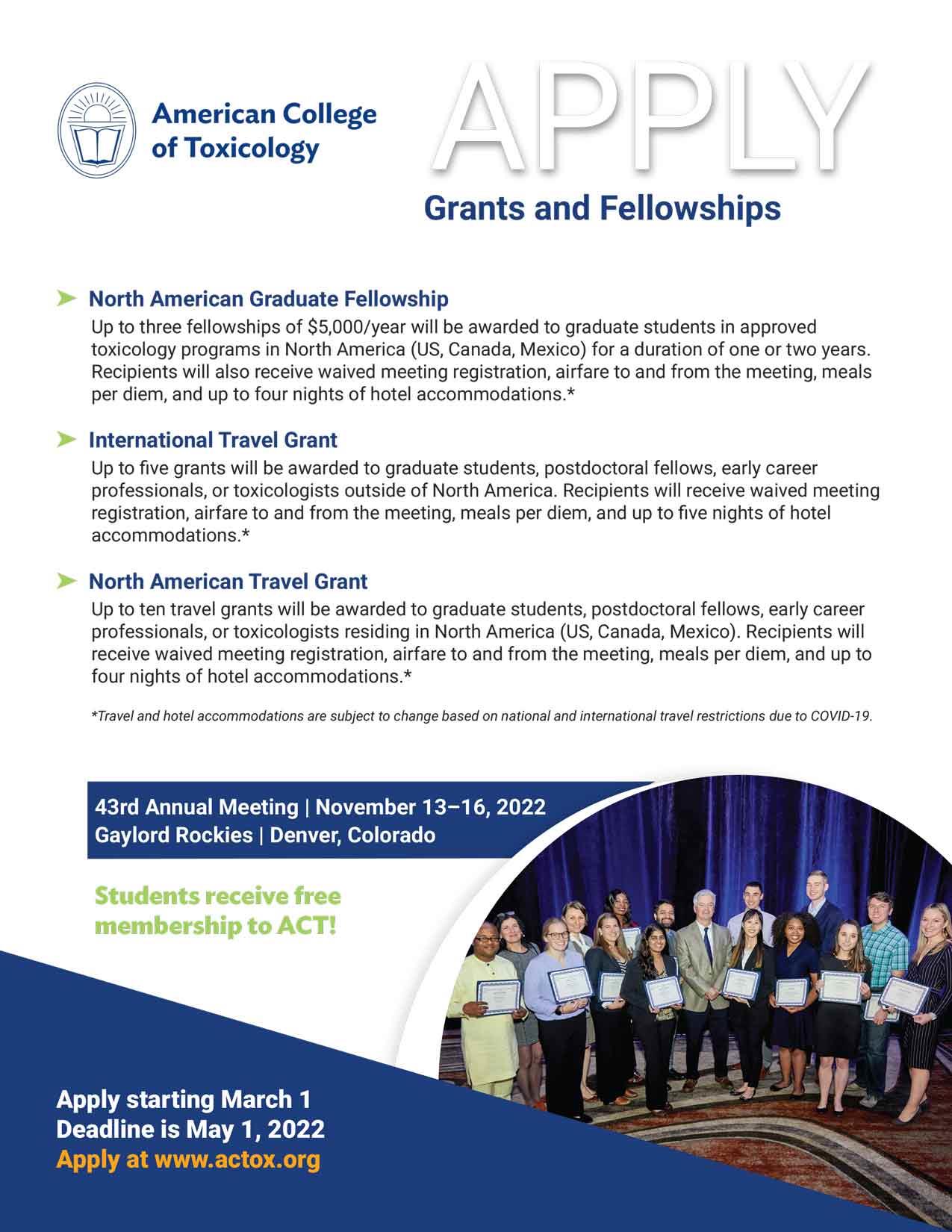
Now Accepting Travel and Fellowship Applications until May 1


Apply Grants and Fellowships

Joseph A. Francisco, 2021–2022 ACT Vice President

Volunteering with ACT


ACT members are afforded many varied benefits as toxicologic professionals. To continue the advancement of the mission of ACT to educate, lead, and serve, member volunteers are integral to the continued success of the College. There are a few options for volunteer opportunities that can be accessed by members directly through the interACT website (from the home page, select the Volunteer tab).

First, all ACT members can apply to become a reviewer of articles for International Journal of Toxicology (IJT), which is published six times annually.

There is also an opportunity to become an ACT ambassador, using your voice to encourage colleagues to consider joining ACT by sharing your experience of the many benefits of membership.

Finally, there are opportunities to apply to become a member of a committee, subcommittee, or working group, of which there are several within ACT. The term lengths and SOPs are included on interACT for your information, and reviewing these materials is helpful in considering the best fit for you to share your talents. No experience is necessary to participate in any of these volunteer opportunities.

From a timing perspective, you can volunteer as an IJT reviewer or ambassador at any time. For participation on committees, subcommittees, or working groups, term lengths vary per position and run from December 1 through the following November 30 each year. If you are interested in a specific position, term details can be found in the corresponding SOP. It’s easy to volunteer by following the links provided on the interACT website. If you would like to contribute more as a member of ACT, consider these fantastic opportunities to advance the College.

Julie K. Speitel, Newsletter Subcommittee Member

Member in the Spotlight—Moriah Jacobson


1. What company do you currently work with, what is your profession, and how long have you been a member of ACT?
I have been a member of ACT since September 2020 while finishing up my postdoc. I am currently a Field Applications Scientist (FAS) with Taconic Biosciences. I provide scientific expertise pertaining to Taconic’s commercial rodent models. These days, I consider myself a scientist, researcher, consultant, science liaison, advocator, teacher, mentor, salesperson, marketer, and customer service rep, all in one!

2. What is your favorite part of being a member of ACT?
All the possibilities and the people!

3. What have been some of your volunteer or participation activities in ACT?
When I became a member, I was impressed to learn about all the volunteer opportunities. I joined the Social Media Subcommittee in December 2020, and I am currently the Chair. We have some exciting advancements planned for this year, and we have started collaborating with additional subcommittees. I am looking forward to seeing how we continue to grow and work together across ACT.

4. How did you hear about or decide to become involved in ACT?
My postdoctoral research was in behavioral neuropharmacology, and one of the drugs I studied was ketamine. When esketamine became FDA approved for treatment-resistant depression, I was interested in the pharmacology/toxicology review process but knew very little about it. I found ACT when I was looking for online training materials, and it was the perfect place for me to get started.

5. Which emerging areas in the sciences do you find most fascinating and why?
My background is in neuroscience, and for a long time, that is mainly all I cared about. As an FAS, I have had to learn about all other therapeutic areas, such as immuno-oncology, infectious disease, inflammatory disorders, and more. It may sound cliché, but I am currently fascinated by it all! If I must pick one, it would be neuroimmunology.

6. What has been your most rewarding career or personal-related project or experience to date?
I am passionate about helping others, and so I am lucky to be in a position where I get to experience this every day. I am engaged in several mentoring activities; supporting the next generation of scientists and aiding them to grow and succeed is quite possibly the most rewarding experience. A close second is every time I get to collaborate with and help a customer reach their own scientific achievement.

Vincent A. Murphy, PhD, Newsletter Subcommittee Chair

Spring 2022 Membership Update


The Membership Committee recommended membership to 38 new applicants in various membership categories. We would like to extend a very warm welcome to the new members!

New ACT Members—February 2022:

Comfort Abuanor
Bhavesh Ahir
Joshua Allen
Christopher Aluise
Emmanuel Ansah
Andy Baah
Shaw Bairstow
Vrushank Bhatt
Samuel Chuang
Laura Crawford
Laura De Marzi
Kenneth Frimpong
Ernest Fung
Petia Gatzeva-Topalova
Jessica Graham
Joseph Hollenbaugh
David Karanian
Polly Kennard
Michael Kerins
Natalia Kovalova
Myong Gyong Lee
Jesse Lueth
Marianne Manchester
Lauren Mangum
Elena Mastrocola
Andrew Okoth
Chiara Perego
Gregg Prawdzik
Payal Rana
Dharmin Rokad
Jamie Rusted
Natasha Sanabria
Sebastien Sannajust
Andrew Seacat
Tim Streit
Stephanie Wickwire
Rachael Wolters
Sara Zucchi

Ric Stanulis, PhD, DABT, ACT Councilor

ACT Corporate Membership 2022


The American College of Toxicology’s mission to “Educate, Lead, and Serve” has been very successful over the years due in significant part to the generous support of our Corporate Members. The ACT Corporate Membership program is a highly visible way for companies with a vested interest in the field of toxicology to show their support for the vital work of the College, and in return, member companies benefit by elevating their brand and credibility as an ACT partner.

We invite you to consider this terrific opportunity to gain valuable exposure for your company and apply for Corporate Membership with ACT today! Two distinct packages offer an option for every budget.

Why join forces with ACT?

ACT is a leader in toxicology education, offering well-regarded education and resources:

  • Toxicology Training Courses, from basic to advanced levels—five this year!
  • eLearning Seminars, applicable to all career levels
  • Webinars, free to members and nonmembers, on a quarterly basis with more than 35 archived topics
  • ToxChats Podcasts, reporting on cutting-edge news in toxicological research from around the globe
  • The Annual Meeting, with four days of Continuing Education courses, Symposia, and Workshops and ACT Expo Live!—drawing more than 1,000 attendees
  • International Journal of Toxicology, six issues annually with peer-reviewed, multidisciplinary articles and incisive reviews on contemporary issues in toxicology

Who are we, and whom will you reach?

ACT members are professional scientists, postdocs, and students representing:

  • Pharmaceutical and biotech industries
  • Contract research organizations
  • Regulatory agencies
  • Academia
  • Consulting firms

Reap the Benefits of ACT Corporate Membership

ACT Corporate Partner ($3,500 per year):

  • Five job postings for six months each ($1,250 value)
  • Enhanced listing with hyperlink in the membership Newsletter
  • Enhanced listing with your logo in an issue of International Journal of Toxicology
  • Recognition in the Program and on signage at the ACT Annual Meeting
  • One blog post with your unique content in the ACTalks blog
  • One additional Exhibitor Priority Point for companies that also exhibit at the Annual Meeting, and Priority exhibit booth selection at the Annual Meeting
  • Logo on the ACT website home page
  • ACT Corporate Member logo for use on your company website
  • Enhanced listing on the ACT website with your logo, company description (30 words), and hyperlink to your company’s website

ACT Corporate Contributor ($2,000 per year):

  • Two job postings for six months each ($500 value)
  • Listing of company name in the membership Newsletter
  • Listing of company name in an issue of International Journal of Toxicology
  • Listing of company name with hyperlink on the ACT website
  • Recognition in the Program and on signage at the ACT Annual Meeting
  • Priority exhibit booth selection at the Annual Meeting in November 

Thank You to Our Current 2022 Corporate Members:

Altascience Logo

Altasciences transforms the traditional outsourcing paradigm by simplifying and streamlining solutions, whether for a single study or multiple programs, to offer an integrated/synchronized approach to CRO and CDMO services from lead candidate selection to clinical proof of concept, and beyond.

Learn more
 Biomere Logo

Biomere is a global, nonclinical contract research organization (CRO) with locations on the east and west coast, as well as multiple locations in China (JOINN). Our globality, personal approach and our drive to expedite research timelines, makes us ideally suited to support our clients’ needs.

Learn more
Charles River Logo

Charles River has an industry leading network of scientific experts, setting the bar for robust safety assessment of drugs, devices and chemicals. Experience with countless molecules and regulations allows us to mitigate risk and expedite development, saving time and money on the road to approval.

Learn more
inotiv Logo

In choosing a laboratory partner for discovery and development, Expect More: more attention, insight and a superlative experience. Inotiv delivers a comprehensive and integrated range of right-size in vivo discovery and tox services, BioA, pathology, DMPK and consulting solutions essential to your success.

Learn more
Lilly Logo

Lilly unites caring with discovery to create medicines that make life better for people around the world.

Learn more
Lovelace Logo

Lovelace Biomedical is a preclinical contract research organization conducting research to advance pharmaceutical and biotechnology companies in their complex drug development studies. For over 70 years, Lovelace has leveraged its multidisciplinary expertise in toxicology, gene therapy, infectious disease, medical countermeasures and more.

Learn more
 Noble Life Sciences Logo

Noble Life Sciences is a preclinical CRO owned and operated by scientists with decades of experience in drug, vaccine, and device development. We offer GLP and non-GLP services- animal models, PK/PD, safety, toxicology, and cell-based assays with a strong focus on oncology and infectious diseases.

Learn more
Regeneron Logo

Regeneron is a leading biotechnology company that invents life-transforming medicines for people with serious diseases. Our unique ability to consistently translate science into medicine has led to nine FDA-approved treatments and numerous product candidates to help patients.

Learn more

Corporate Contributors

BD (Becton, Dickinson and Company)
Learn more
Gilead Sciences, Inc.
Learn more
ITR Laboratories Canada Inc.
Learn more
Sanofi U.S.
Learn more

You and Your ORCID!


ORCID Graph

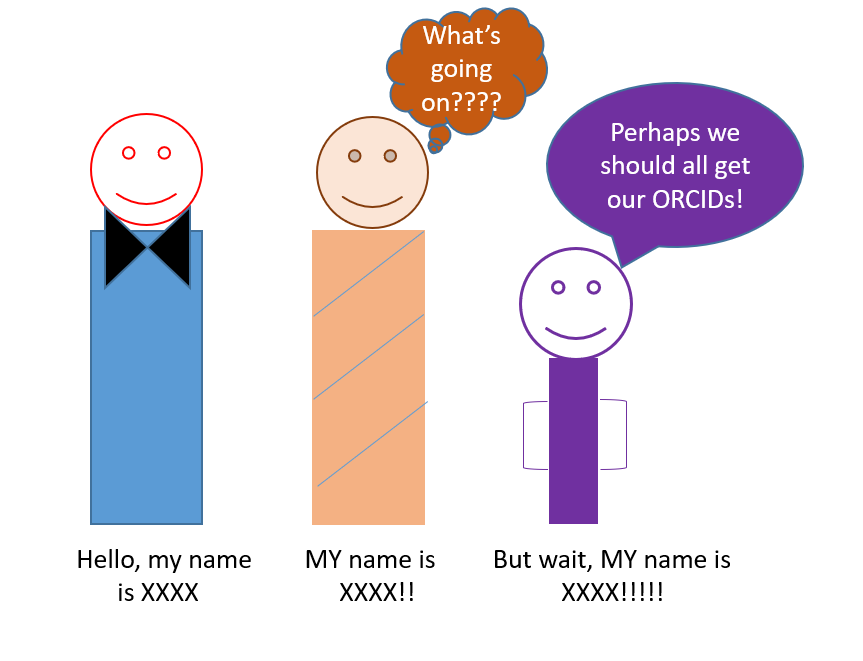
Open Researcher and Contributor ID (ORCID) numbers are unique identifiers that distinguish you from every other researcher. The format is typically 0000-####-####-####, and you can sign up for your very own ORCID at https://orcid.org.

So, why is your Editor telling you this? Many journals, including SAGE, publisher of International Journal of Toxicology, now require that the corresponding author of a manuscript has an ORCID; in fact, there are journals that require that ALL authors have an ORCID to submit a manuscript.

But WHY? Think about all the very common names in various cultures. For example, consider the number of people named “John Smith” in any large US city. What if they were all in scientific research? You might perform a literature search and find lots of people with that name, but you’re not quite sure if you’re looking at the specific person whom you want to follow. An individual’s ORCID number eliminates the risk of confusing their identity with another researcher with the same, or a very similar, name.

So, sign up for your ORCID, and you’ll be ready when you need it!

Mary Beth Genter, PhD, DABT, ATS, Editor-in-Chief IJT

Education Committee SPRINGS into Action


With the advent of spring and longer days, the ideas and activities within EdCom are truly blooming. The committee has kicked off the year by reviewing and selecting the courses for this year’s Continuing Education (CE) program at the Annual Meeting. In coordination with the Program Committee, seven CE course were selected, filling all eight available slots as the Study Director CE course is an all-day offering. Stay tuned for more information in the coming weeks about the Annual Meeting and the CE courses for 2022.

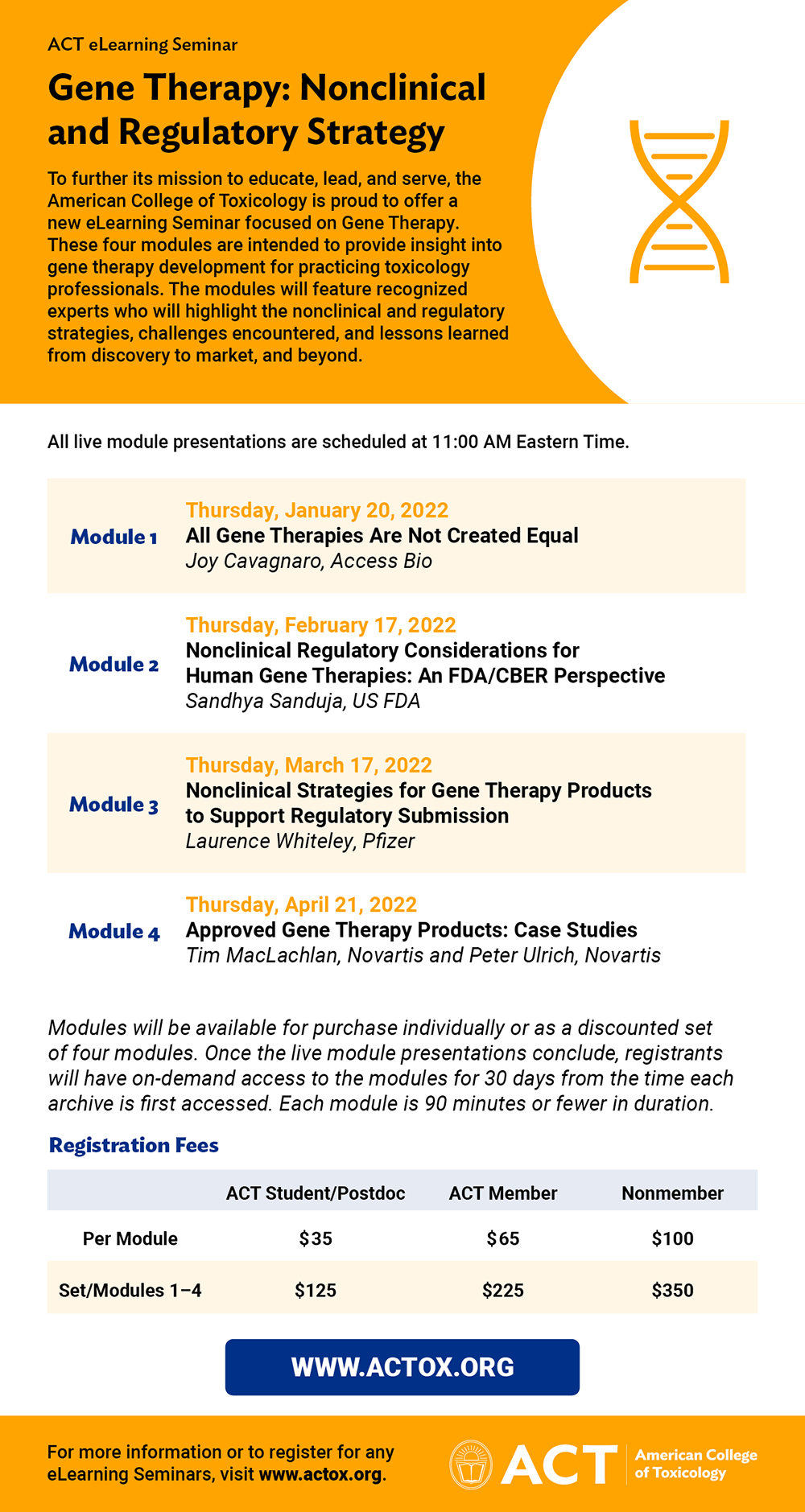
The Education Committee does not hibernate after CE course selection. We continue to focus on the budding activities within all the subcommittees. Here are a few recent accomplishments. The eLearning Subcommittee has presented two of three modules in Gene Therapy: Nonclinical and Regulatory Strategy. The first module was held in January and had 69 attendees for the live presentation. Module 2, held in February, was titled “Nonclinical Regulatory Considerations for Human Gene Therapies: An FDA/CBER Perspective.” Additionally, the subcommittee is now working on modules for “Specialty Oncology Biotherapeutics” to complement and extend a “Biologics” in-person learning course that the Education Committee is developing as well. The Webinar Subcommittee released a webinar in early March titled “Understanding Your Model: Considerations for Use of Tg.rasH2 Mice in Carcinogenicity Assessment” and continues to work on content for additional webinars to be released throughout the year. The Podcast Subcommittee is hard at work generating ideas for exciting offerings.

As our committee starts to focus on the next round of educational opportunities for the remainder of 2022, we want to continue to plant the seeds of opportunity for our membership. If there are new ideas that you would like to cultivate, please do not hesitate to reach out any member of the Education Committee. We have exciting plans for gathering your feedback on what you, the membership, want for content. The Education Committee wants to provide exceptional, consistent, balanced opportunities throughout the year for learning activities. We can’t succeed without our membership, so when we call on you for feedback, to sow the seeds of success, we look forward to hearing from you.

Laura Andrews, PhD, DABT, ATS, ACT Councilor

2022 Pathology for Nonpathologists Course: May 16–18


Upcoming Global Drug Delivery and Formulation Summit


13th Global Drug Delivery and Formulation (DDF) Summit
When: June 27–29, 2022
Where: The Maritim proArte Hotel in Berlin and Online

Read further details and register online: https://www.ddfevent.com/

Prachi Borude, PhD, Newsletter Subcommittee Member

Final Live Gene Therapy Event—April 21: Module 4


New ToxChats Podcast on Gene Therapy


ToxChats banner

The idea behind gene therapy is to introduce, remove, or change a portion of person’s genetic code in order to cure a disease. Several gene therapy products are currently under development and there are two FDA-approved in vivo products, both using adeno-associated virus (AAV) vector gene delivery. Both of these treatments provide a functional copy of a gene that is not functioning properly in order to provide the body with the instructions for making the appropriate gene product or protein. One is for inherited retinal dystrophy and was approved in 2017, the other is for spinal muscular atrophy and was approved in 2019. In this podcast Dr. Nicholas Buss from REGENXBIO will discuss the science behind the nonclinical development of gene therapy products using AAVs.

Off the Beaten Path: The Nonclinical Development of Gene Therapy Products to Cure Monogenic Diseases

Select ToxChats© podcast episodes are available on iTunes and Google (search ToxChats), in addition, all episodes are on the ACT website. The podcasts report on cutting-edge news in toxicological research from around the globe, and feature interviews with experts and a review of current advances. We encourage you to listen to and follow ToxChats. We welcome any feedback or suggestions for future topics.

Society of Toxicologic Pathology (STP) 41st Annual Symposium


Society of Toxicologic Pathology (STP) 41st Annual Symposium
Toxicologic Pathology of the Hematopoietic System
Austin, Texas - June 18-23, 2022

The hematopoietic system embodies the convergence of anatomic and clinical pathology specialties and promotes a multidisciplinary approach to assessing disease mechanisms. The aim of the 2022 Society of Toxicologic Pathology Annual Symposium is to converge clinical and anatomic pathology aspects of the hematopoietic system and to expose attendees to a broad array of contemporary topics related to toxicologic pathology of the hematopoietic system.

Please see the STP Meeting website for additional information and any updates regarding the ongoing pandemic.

TOP